Etiquette on the water
Rafting up, wash, shared jetties, service points, rowers and anglers, wildlife and rubbish: the unwritten rules that make boaters welcome everywhere.
Updated 23 Oct 2026
On this page
Ireland's waterways are a small world. The crew you share a jetty with tonight will be at the next lock tomorrow, and the locals who keep their boats here year-round notice who slows down and who does not. A little courtesy goes a long way, and it is mostly common sense.
Slow down, watch your wash
Every boat pushes out a wave behind it, its wash. At speed it rocks moored boats, spills the tea, swamps canoes and eats away the banks and the reed beds where birds nest. Waterways Ireland asks every skipper to look behind often and slow right down near moored boats, jetties, locks, anglers and anyone in the water (Shannon boater information). On the Shannon the bye-laws set 5 km/h within 200 m of a bridge or jetty, in harbours and within 100 m of a moored boat; on the Grand and Royal canals the limit is 6 km/h throughout (Special Marine Notice 1/2026). If your wash breaks on the bank, you are going too fast.
Sharing a jetty
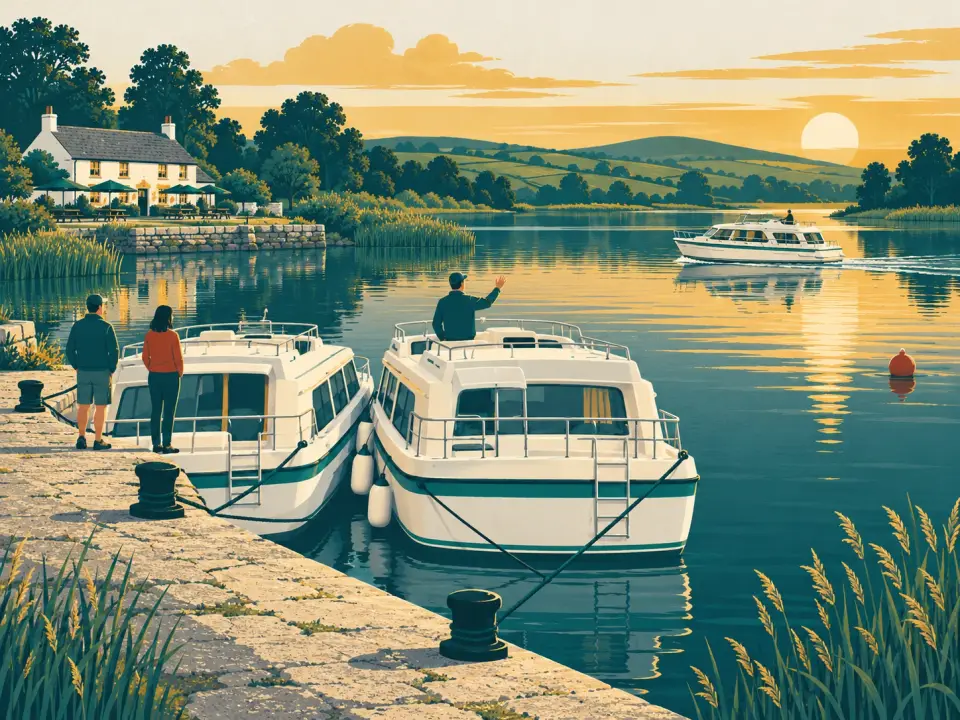
- Moor tight. Pull up close to the boat ahead (keeping about a metre clear for fire safety) so that one more boat fits behind you.
- Don't block the services. Leave water points, pump-outs, ladders and slipways clear, and move off the pump-out as soon as you are done.
- Lead-in jetties at locks are for boats waiting for the lock, not for lunch or the night.
- Help with lines. When a boat comes in, offer to take a rope. It is the quickest way to make friends on the river.
- Respect the time limits so others get a turn. See Mooring.
Rafting up
When a harbour is full, boats moor alongside each other, "rafting up". It is normal, but it has rules:
- Ask first. The crew on the inside boat has the right to say no, for example if they are leaving early.
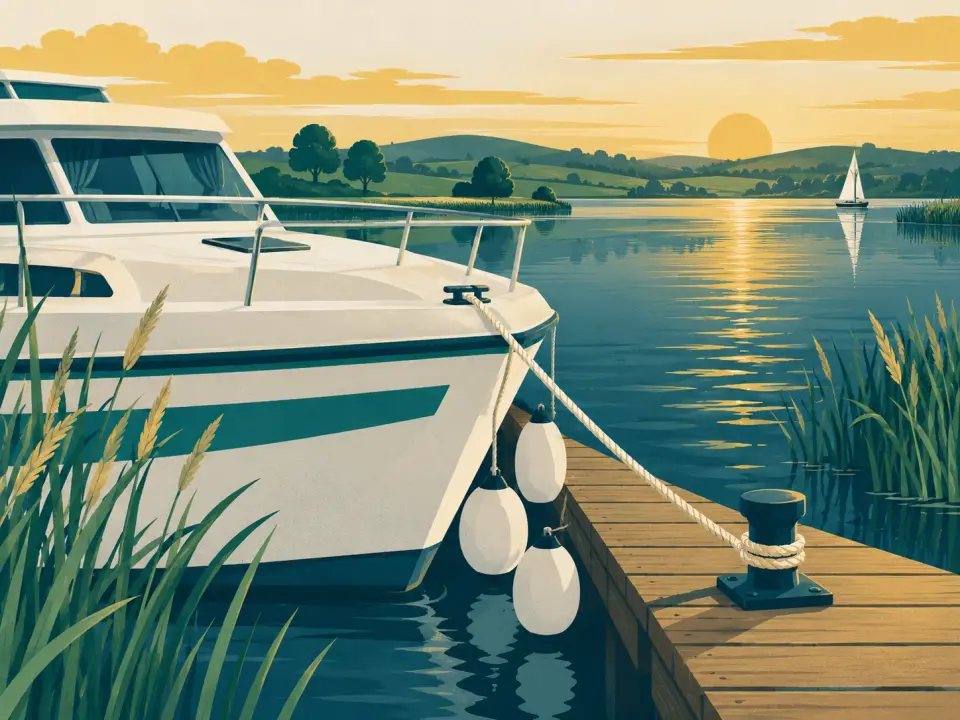
- Fenders on your side, and your own bow and stern lines to the shore if you can reach, not just to the other boat. The inside boat should not carry your weight.
- Cross over their foredeck, not through the cockpit, quietly, and not at all after they have gone to bed if you can avoid it.
- Agree on the morning. If you leave first, you may have to let the outer boats off and back on.
- Smaller boats usually raft outside bigger ones.
Noise and night
Sound carries over water. Keep music inside the boat, turn off the engine once moored (batteries charge while you cruise), and think twice before running a generator in a harbour in the evening. Quiet hours are a courtesy everywhere, especially in small village harbours where houses face the quay.
Rowers, sailors, paddlers and anglers
- Rowing crews train near Athlone, Carrick-on-Shannon, Coleraine, Enniskillen and Limerick. Slow down and keep your wash low: a low racing boat swamps easily.
- Sailing races run on Lough Derg, Lough Ree and Lower Lough Erne in summer, between yellow buoys. Power gives way to sail.
- Paddlers are common on the Blueways. Give them room and slow down.
- Anglers on the bank or in small boats: pass slowly and wide, and watch for their lines.
All four are in Waterways Ireland's Special Marine Notice 1/2026.
Locks
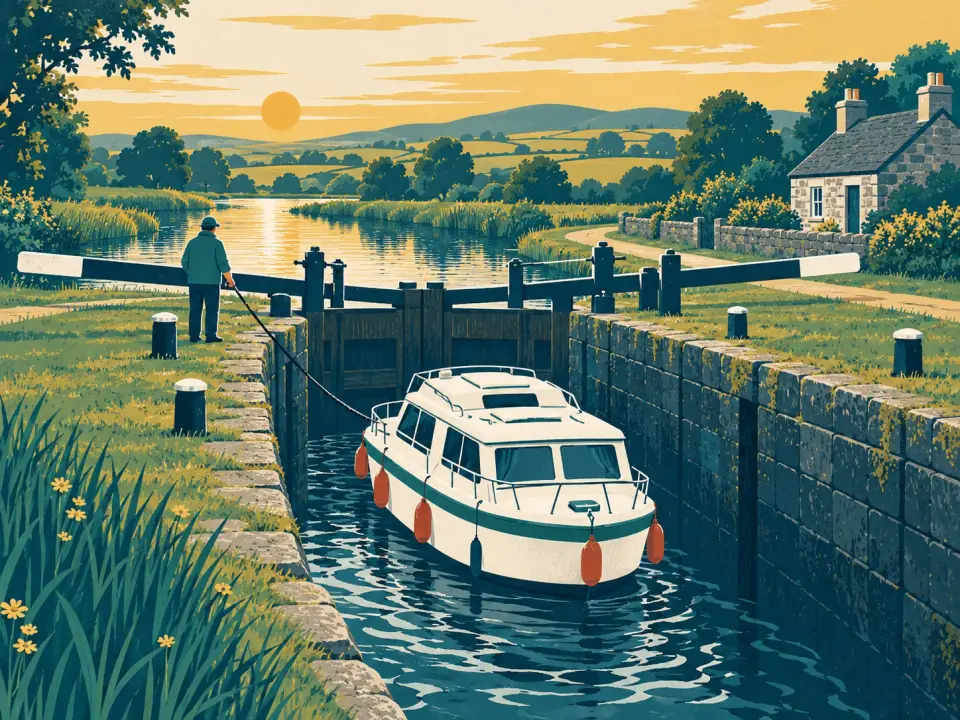
Wait your turn at the lead-in jetty, share the chamber when the lock-keeper waves you in, and follow their instructions. On self-operated locks, close the gates and sluices behind you unless a boat is coming the other way and has asked you to leave them. See Locks.
Rubbish, toilets and the water
- Nothing goes over the side: no rubbish, no cigarette ends, no food scraps.
- Toilet waste stays in the holding tank until you reach a pump-out. Never empty it into the water.
- Use the bins provided, and carry rubbish on when they are full.
- Use phosphate-free washing-up liquid if you can.
Wildlife and invasive species
Swans nest in the reeds in spring, herons fish from the banks, and on Lough Derg you may be lucky enough to see a white-tailed eagle. Keep your distance from nests, keep dogs on a lead near birds and grazing cattle, and do not land on islands that are nature reserves or private.
Zebra mussels and invasive plants spread from one water to the next on boats, trailers and gear. If you bring your own boat or kayak, follow Check, Clean, Dry every time you move between waterways (Special Marine Notice 1/2026, invasives.ie).
Ashore
Most harbours sit in villages where people live. Park considerately, keep dogs on a lead, close gates on the towpath and say hello. Pubs and shops near the water depend on boaters, and boaters depend on them: eat local when you can.
In an emergency
Call 112 or 999 and ask for the Coast Guard. Both numbers work in Ireland and in Northern Ireland.
Safety on the waterIn an emergency
Call 112 or 999 and ask for the Coast Guard. Both numbers work in Ireland and in Northern Ireland.
Safety on the water